Concrete near the North Sea is never neutral. Rain darkens it, salt tests it and low winter light makes every joint visible. The question is not how to keep the material unchanged, but how to design the change deliberately.
Our coastal work begins with exposure mapping. Wind-driven rain, spray, freeze-thaw cycles and sheltered zones are drawn before elevations are fixed. These forces determine mix, cover, jointing and the location of every vulnerable edge.
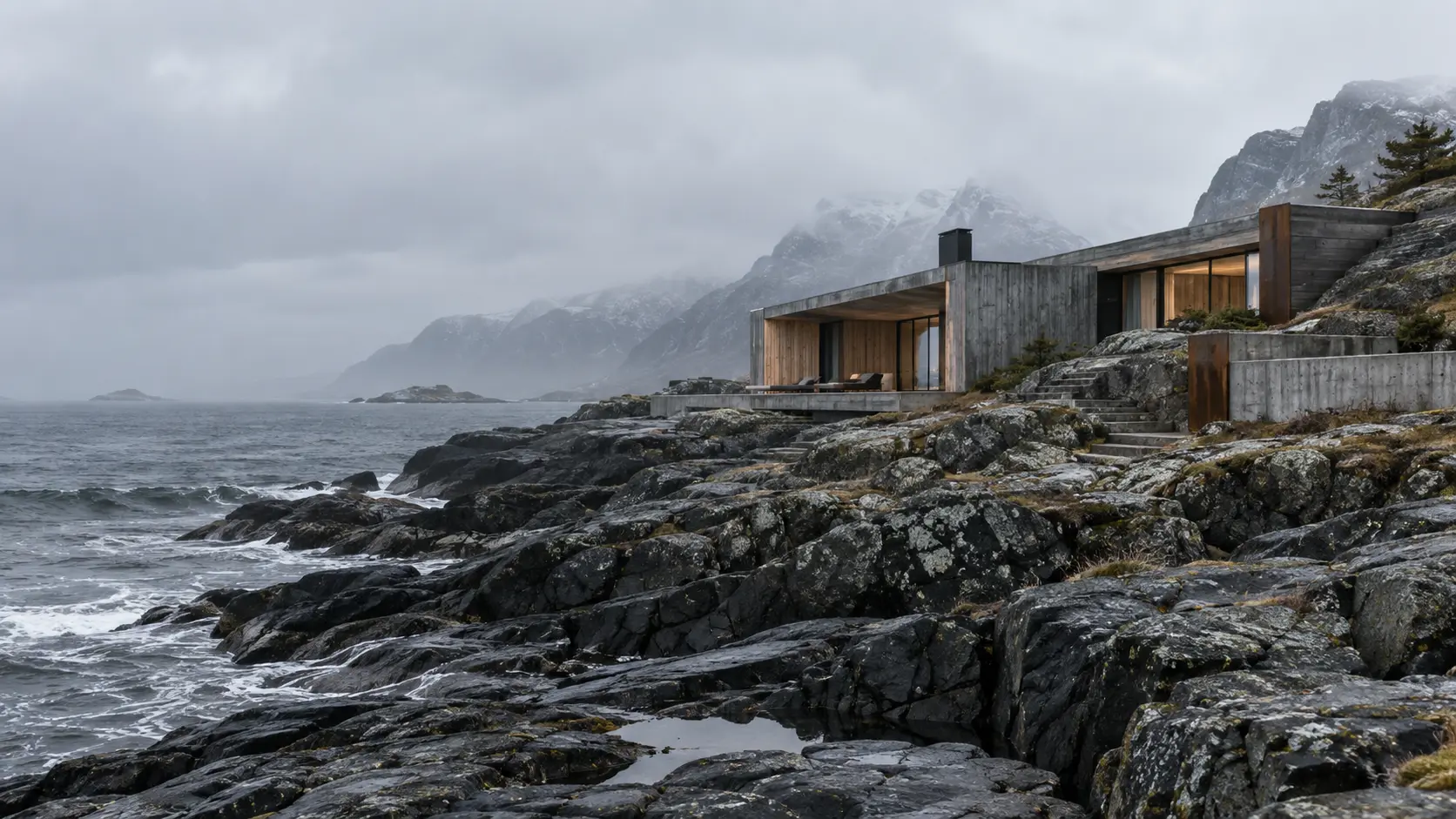
Detail follows water
Water reveals where a drawing is vague. Copings, thresholds and recesses must move it with clarity. We prefer robust falls and visible drips over hidden membranes asked to compensate for uncertain geometry.
This produces a particular expression: thickness can be read, joints follow assembly and weathering is given room to occur evenly.
Patina is not failure
A building close to the sea will record its environment. We distinguish between harmless visual change and deterioration that compromises performance. The first can enrich a building; the second must be prevented through evidence-based specification.
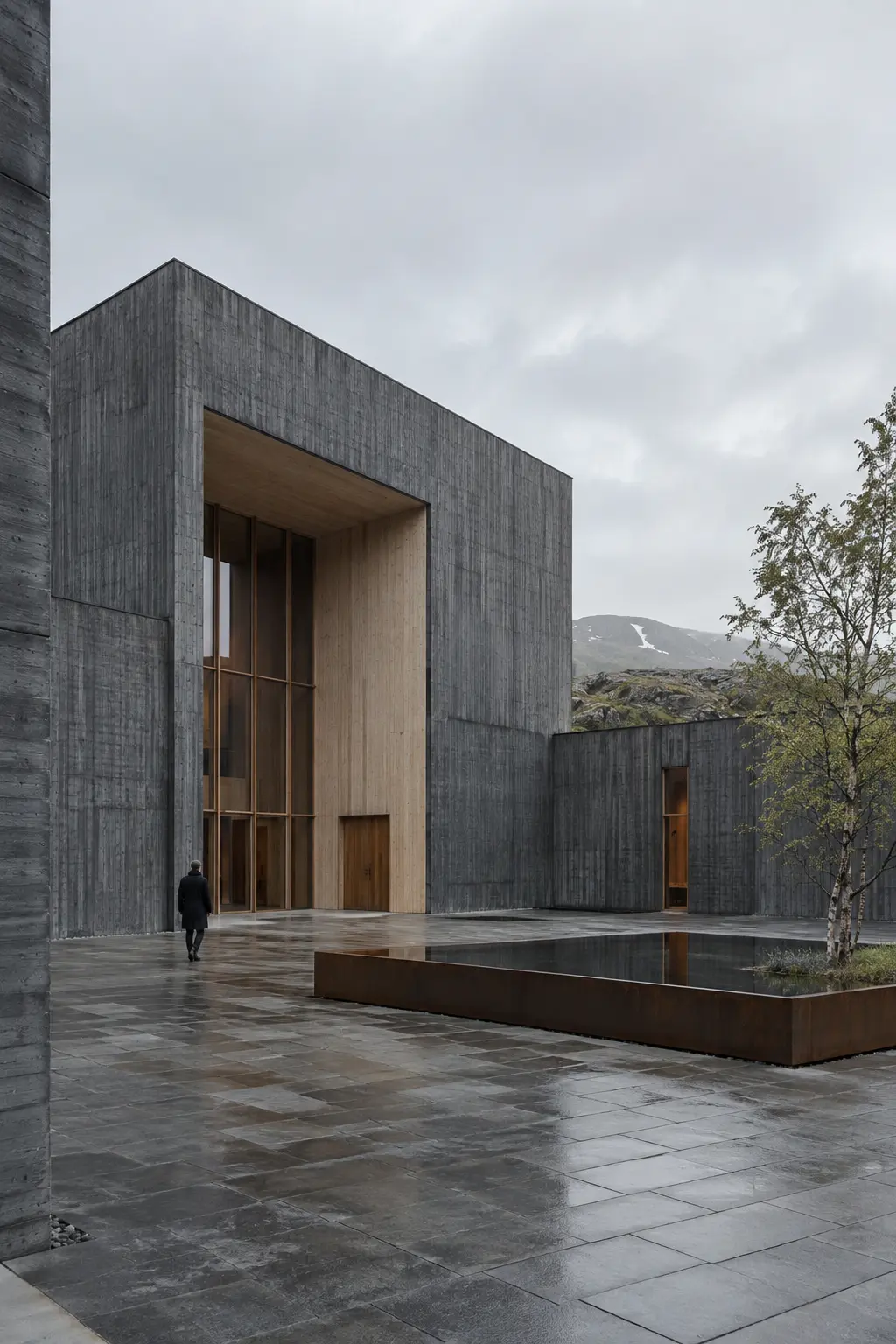
Twenty-year thinking
The most meaningful sustainability decision may be to make a building worth maintaining. Durable structure, replaceable layers and accessible details keep repair local rather than forcing wholesale replacement.
Weather is not an image applied to architecture. It is one of the authors.